
Rare Earth Suppliers in Uganda for Strategic Mineral Sourcing
Mineral Dealers Africa supports qualified technical buyers and investors evaluating rare earth suppliers in Uganda through project and supplier screening, sample-testing coordination, mineralogical review, compliance guidance and transaction support.
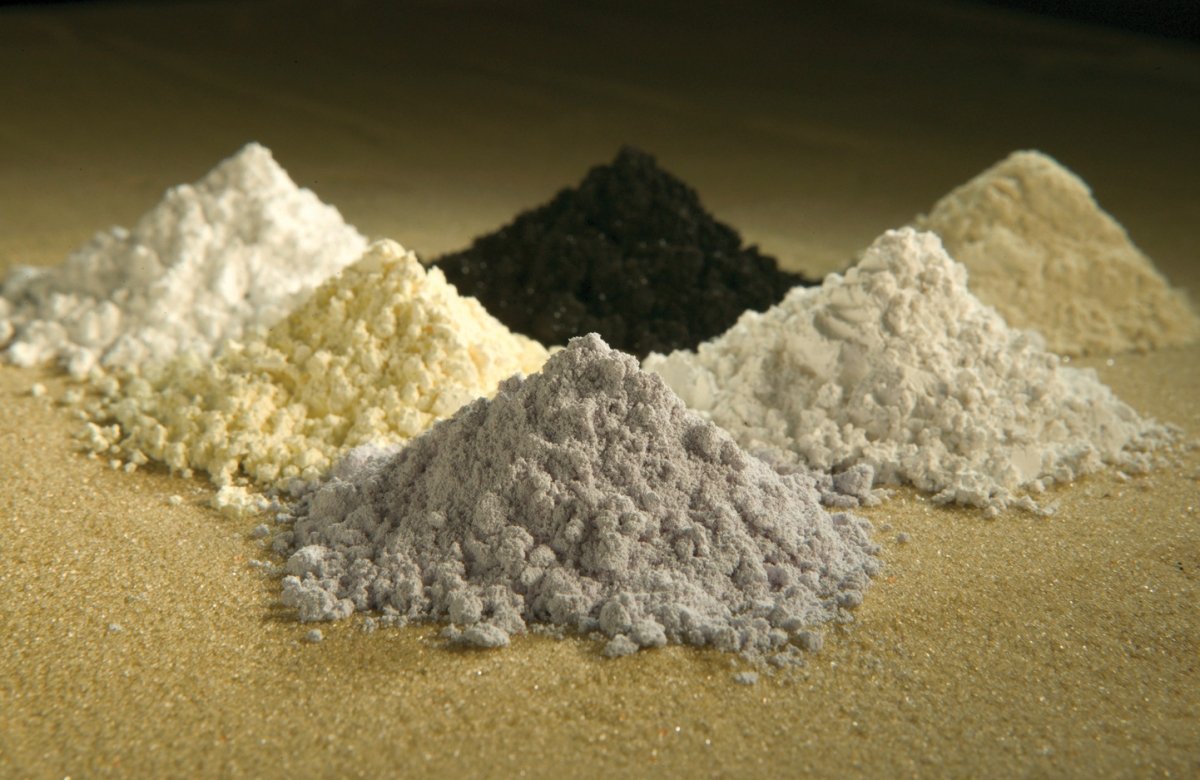
Rare earth elements cannot be confirmed from colour, weight or a photograph. Commercial evaluation requires multi-element laboratory data, mineralogical context, source information and an understanding of the processing route.
Rare Earth Elements Are a Group, Not One Mineral
The rare earth elements generally include the fifteen lanthanides together with scandium and yttrium.
They may be discussed as light and heavy rare earths because individual elements have different markets, uses, supply risks and processing challenges. Commercial buyers often focus on individual element distribution rather than total rare earth content alone.
Rare earths occur within minerals, clays or processed products. A seller should describe whether the offer is raw material, an exploration sample, concentrate, mixed rare earth carbonate, oxide or another specific product.
Recognised Rare Earth Areas and Projects in Uganda
Official publications identify rare-earth potential in aluminous clays and eastern Uganda carbonatite centres.
Makuutu, Bugweri District
DGSM publications identify rare-earth-bearing aluminous clays at Makuutu. The project has become Uganda’s most visible rare earth development.
Sukulu–Bukusu Area
Official mineral information identifies rare-earth potential associated with eastern Uganda carbonatite centres.
Critical-Mineral Mapping
DGSM provides critical-minerals, green-energy-minerals and occurrence maps for further technical investigation.
Makuutu Has Advanced Beyond Early Exploration
Ionic Rare Earths’ current project information reports that Makuutu holds a Ugandan large-scale mining licence awarded in January 2024. Company and ASX materials also describe demonstration-plant production of mixed rare earth carbonate and continued development work.
These are project-specific developments. Mineral Dealers Africa does not represent or resell Makuutu project material unless there is a documented and authorised commercial relationship for a particular transaction.
Buyers and investors should review the licence, project disclosures, technical reports, ownership structure, environmental commitments and current status directly with authorised project parties.

What Rare Earth Buyers Need from a Sample or Product
Total rare earth oxide is useful, but individual element distribution and processing behaviour often determine commercial interest.
Total Rare Earth Content
A report may state TREO or individual concentrations. The reporting basis and excluded elements should be clear.
Individual Element Distribution
Neodymium, praseodymium, dysprosium, terbium, yttrium, scandium and others have different markets.
Mineralogy & Host Material
Clay-hosted, hard-rock and carbonatite-related material can require different extraction routes.
Impurities & Radioactivity
Uranium, thorium, iron, aluminium, phosphate and other components affect safety and processing.
Leachability & Recovery
Concentration does not prove economic recovery. Process tests may be needed to understand extraction.
Product Purity
Mixed carbonate, mixed oxide and separated oxides require composition, moisture and quality data.
Rare Earth Materials Should Be Described Precisely
| Material form | What it may represent | Buyer information required |
|---|---|---|
| Exploration sample | Rock, soil, clay or drill material collected for investigation | Location authority, sampling method, geology and laboratory data; not automatically a saleable product |
| Rare-earth-bearing clay or ore | Natural material containing rare earths within a host system | Representative grade, mineralogy, tonnage, moisture, impurities and processing evidence |
| Concentrate | Processed material enriched in rare earth-bearing minerals | Composition, recovery route, impurities, quantity and chain of custody |
| Mixed rare earth carbonate | An intermediate product containing a mixture of rare earths | Individual element distribution, purity, moisture, contaminants and packaging |
| Rare earth oxide | Mixed or separated oxide product | Exact oxide, purity, particle characteristics, producer, analysis and lot identity |
Rare Earth Identification Requires More Than a Basic Assay
A useful programme may combine multi-element chemistry, mineralogy and process-related testing. The scope depends on whether the buyer is evaluating a geological sample, ore, concentrate or refined product.
- Document sample location and collection method
- Prepare samples to avoid contamination or segregation
- Measure individual rare earth elements
- Review uranium, thorium and other impurities
- Use mineralogical analysis to identify host phases
- Consider leach or recovery testing
- Retain duplicate samples and records
Why Rare Earth Elements Matter to Global Industry
Permanent Magnets
Neodymium, praseodymium, dysprosium and terbium can be important in high-performance magnets.
Transport & Energy
Rare earths are used in selected electric motors, wind turbines and energy technologies.
Electronics
Applications include displays, sensors, polishing materials, lasers and communications equipment.
Catalysts & Materials
Cerium, lanthanum and others are used in catalysts, glass, ceramics and advanced materials.
How Rare Earth Suppliers in Uganda Are Screened
Legal Entity & Authority
Identify the rights holder, supplier, representatives and authority to share data or market material.
Licence & Tenement
Confirm the mineral right, licence area, status, validity and relationship to the sample.
Technical Disclosure
Review sampling, laboratories, resource reports, competent-person statements and limitations.
Environmental & Social Work
Assess land access, environmental approvals, community engagement and obligations.
Processing Evidence
Understand whether the proposed flowsheet has been tested and what product can be produced.
Commercial Authority
Confirm whether the offering party can negotiate, sell or enter an offtake agreement.
Information a Rare Earth Buyer or Investor Should Provide
For physical product sourcing
- Required material form
- Target individual rare earths
- Maximum impurities and radioactivity
- Trial and recurring quantity
- Destination, packaging and test method
For project investment or offtake
- Investment model and budget range
- Preferred development stage
- Technical and jurisdiction criteria
- Offtake, partnership or financing objective
- Due-diligence timeline
How to Evaluate Rare Earth Opportunities in Uganda
Define the Objective
Clarify whether the inquiry concerns a sample, supply, project investment, processing or offtake.
Identify the Rights Holder
Verify the legal entity, licence, tenement and authority.
Review Technical Data
Assess chemistry, mineralogy, sampling, resources and process evidence.
Inspect and Confirm
Arrange site, sample, laboratory or product verification.
Assess Compliance & ESG
Review environmental, land, community and regulatory considerations.
Negotiate Documented Terms
Record confidentiality, data use, price, investment and conditions.

Rare Earth Logistics Begin with Correct Classification
Before shipment, establish what the material is, who owns it, whether it is authorised for movement, how it should be packaged and what safety or destination requirements apply.
- Confirm material and product classification
- Review composition and radioactive elements
- Use sealed packaging and lot identification
- Prepare mineral, customs and transport documents
- Confirm destination import requirements
- Use an insured logistics provider
Avoid Unsupported Rare Earth Claims
Colour is not identification
Bright powders and unusual stones cannot be assumed to contain a particular rare earth.
Grade is not recoverability
A concentration result does not establish that elements can be economically extracted.
A project name is not selling authority
Only authorised rights holders or representatives should market project data or products.
Evaluate a Rare Earth Opportunity
Submit target elements, product or project criteria, technical standard and commercial objective.
Submit a Rare Earth InquiryPresent Technical Information Responsibly
Provide licence and authority information, sample provenance, laboratory data and the exact opportunity.
Supplier GuidanceRare Earth Suppliers in Uganda: Buyer Questions
What are rare earth elements?
They are a group generally comprising the fifteen lanthanides together with scandium and yttrium.
Where are rare earths reported in Uganda?
Official publications identify rare-earth-bearing clays at Makuutu and potential associated with eastern Uganda carbonatite centres.
Can a rare earth stone be identified from a photograph?
No. Suitable multi-element and mineralogical testing is needed.
What is TREO?
TREO generally refers to total rare earth oxides, but the reporting basis and individual element distribution should be reviewed.
Why do individual elements matter?
Elements such as neodymium, praseodymium, dysprosium, terbium, yttrium and scandium have different uses and markets.
Does high grade mean the material is economic?
Not necessarily. Mineralogy, recovery, processing, scale, infrastructure and markets also matter.
What is the current Makuutu context?
Current project disclosures report a large-scale mining licence awarded in January 2024 and continued demonstration and development work.
Can Mineral Dealers Africa sell Makuutu material?
No such authority should be assumed. Project-specific material requires documented authorisation from the rights holder or seller.
Can you coordinate rare earth testing?
We can help define the testing objective and coordinate with a suitable independent technical provider.
How do I contact rare earth suppliers in Uganda?
Submit a complete technical or investment requirement so opportunities can be screened for authority and data quality.
Explore Rare Earth Suppliers in Uganda with Better Technical Information
Tell us the target elements, product or project type, technical standard and commercial objective.